Choosing the right water meter can feel overwhelming. A wrong decision can lead to inaccurate billing and high maintenance costs. Understanding the core differences is key to making a smart investment.
Ultrasonic water meters offer superior accuracy and longevity by using sound waves to measure flow, meaning they have no moving parts. Mechanical meters are cheaper upfront but rely on a physical impeller that wears down over time, reducing accuracy and requiring more maintenance. The market is now favoring ultrasonics.
Over my 15 years in the water meter industry, I've seen many technologies come and go. But the shift we're seeing right now is different. It’s a fundamental change in how we think about water measurement. For years, mechanical meters were the default choice. Now, that's changing fast, and for good reason. Let's dig into why this is happening and what it means for your projects.
How Do They Actually Measure Water Flow?
You have a project that needs accurate water measurement. You see two main options, but how they work seems complex. This confusion can lead to picking a meter that isn't right for your long-term needs.
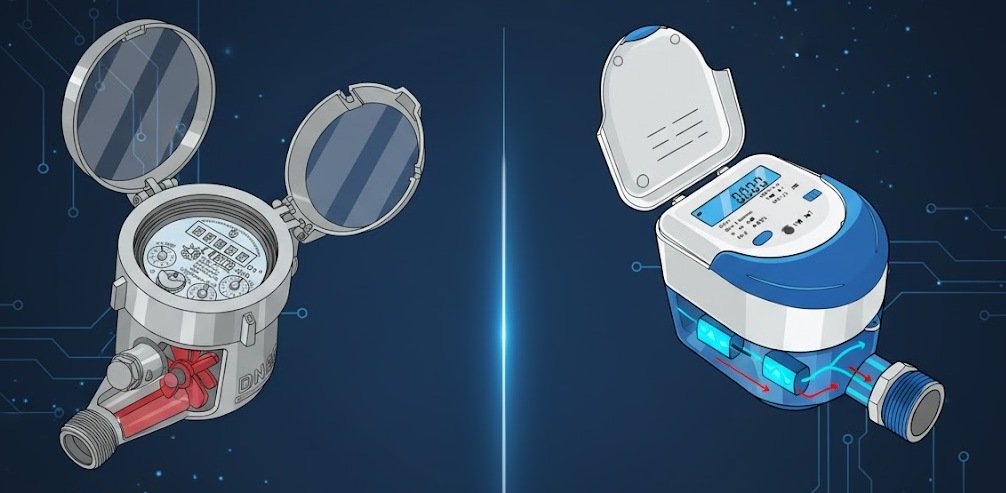
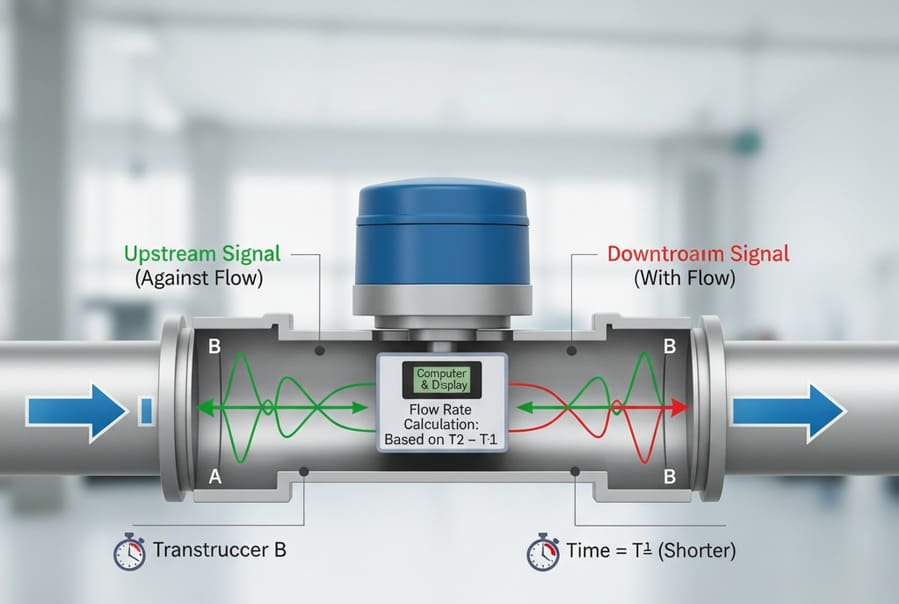
A mechanical meter uses a small turbine that spins as water passes through it. The faster the water, the faster it spins, and a register counts these rotations to measure volume. An ultrasonic meter has no moving parts. Instead, it sends sound pulses through the water, measuring the time difference between signals traveling with and against the flow to calculate volume with extreme precision.
To really understand the difference, it helps to look at them side-by-side. I've worked with both types for years, and the design difference is the source of all their other pros and cons. A mechanical meter is like a traditional windmill. It works, but it's subject to wear and tear. Sand, grit, or minerals in the water can slow the turbine or even stop it over time. This means its accuracy naturally decreases.
An ultrasonic meter is completely different. Think of it as using a stopwatch. It sends a sound signal downstream and measures how long it takes. Then it sends one upstream. The signal going with the flow is faster. The meter's internal computer uses this tiny time difference to calculate the flow rate. Because there are no moving parts to wear out, its high accuracy remains consistent for its entire lifespan.
Core Technology Comparison
| Feature | Mechanical Water Meter | Ultrasonic Water Meter |
|---|---|---|
| Measurement Principle | Physical turbine/impeller rotation | Transit-time ultrasonic sound waves |
| Moving Parts | Yes (turbine, gears) | No |
| Accuracy Loss | Yes, due to wear and tear | No, accuracy is stable |
| Sensitivity | Poor at low flow rates | Excellent, even at very low flow rates |
| Maintenance | Requires periodic checks and calibration | Virtually maintenance-free |
Is the Higher Upfront Cost of Ultrasonic Meters Really Worth It?
The price tag on an ultrasonic meter can cause hesitation. You worry that it will blow your budget. But focusing only on the purchase price can lead to higher costs down the road.
Yes, the initial investment is justified. The total cost of ownership for an ultrasonic meter is often lower due to zero maintenance, a much longer lifespan (10-15 years), and sustained accuracy that prevents revenue loss from under-billing. Mechanical meters, while cheaper initially, incur costs from repairs and eventual replacement.
As a purchasing manager, you are always judged on the total cost of ownership (TCO), not just the initial ticket price. I’ve seen clients choose the cheaper mechanical option only to face significant costs later. A mechanical meter might last 5 to 7 years, and its accuracy declines throughout that time. This means you are losing revenue every day from unbilled water. Plus, you have to budget for maintenance teams to check, clean, and recalibrate them.
Ultrasonic meters change this equation completely. They have a lifespan of 10, sometimes even 15 years. With no moving parts, there is nothing to wear out or maintain. You install it, and it just works. The accuracy it has on day one is the same accuracy it has in year ten. This means you capture revenue from even the lowest flow rates, like a dripping tap. When you add up the savings from no maintenance and the increased revenue from sustained accuracy, the higher upfront cost pays for itself.
Cost-Benefit Analysis Over 10 Years
| Cost Factor | Mechanical Meter (Example) | Ultrasonic Meter (Example) |
|---|---|---|
| Initial Purchase | $50 | $150 |
| Maintenance & Labor | $20/year x 10 years = $200 | $0 |
| Replacement | 1 replacement needed = $50 | 0 replacements needed = $0 |
| Revenue Loss (due to inaccuracy) | ~5% loss after 3 years, growing | ~0.1% loss, stable |
| Total Cost (Excluding Revenue Loss) | $300 | $150 |
Why Is the Global Market Shifting So Quickly to Ultrasonic Meters?
You might notice more tenders and projects specifying ultrasonic meters. You wonder if you're missing a major industry trend. Ignoring this shift could leave your company with outdated and less efficient technology.
The market is shifting because of two things: proven long-term value and falling costs. Countries are moving past early trials and now demand ultrasonic meters for major projects. At the same time, massive production scale in China has made the technology's core components, like chips, much cheaper.
I’ve had a front-row seat to this change. For years, we promoted ultrasonic technology to international clients who were curious but cautious. Now, that caution has turned into action. The market data is impossible to ignore. For example, in 2024, my company, UltraMetering, was the top Chinese exporter of water meters to Mexico, with $2.8 million in mechanical meter sales. But in just the first six months of 2025, one of our competitors shipped over $4.7 million in ultrasonic meters to a single client in Mexico. This isn't just growth; it's a complete market transformation.
This is happening globally. Markets that were just learning about the technology a few years ago are now implementing it on a large scale. The other huge factor is cost. As Chinese manufacturers like the ones we partner with have increased production volumes year after year, the entire supply chain has become more efficient. The specialized chips and modules at the heart of an ultrasonic meter have dropped in price. This means the upfront cost difference between a mechanical and an ultrasonic meter is shrinking, making the decision easier for purchasing managers everywhere.
Conclusion
The evidence is clear. While mechanical meters have their place, the superior accuracy, longevity, and lower total cost of ownership make ultrasonic meters the smarter investment for the future.